

Story by MetroNews Statewide Correspondent Brad McElhinny
Kanawha Circuit Judge Richard Lindsay cut through a couple of layers of confusion to issue a verbal order denying a family’s religious exemptions claim to school vaccination requirements, with the judge concluding that the state has a compelling health interest in suppressing the spread of disease.
The first practical challenge in the courtroom was that a Charleston mother representing her family without a lawyer did not attend the hearing for a second time that it had been scheduled. Because the mother had a second chance and had submitted her position in writing, the judge went ahead today.
The second matter the Kanawha judge had to weigh was that a counterpart in Raleigh County, Judge Michael Froble, issued a written order on Thursday afternoon to certify a class action for families asserting their religious beliefs to decline mandatory school vaccinations.
Froble’s class action order did lay out a pathway for families who may have active cases in front of other judges: “Class members who are currently pursuing related actions in other courts may join this class upon voluntary withdrawal of their pending claims, with leave of the court in which those claims are pending.”
Because the plaintiff in Kanawha would have had to have taken additional steps to withdraw from that case — and because she had twice had missed opportunities in court already — Judge Lindsay went ahead. Essentially, the conclusion was that the Kanawha case was already active and the Raleigh class action is a parallel court action.
“So what we have here are two concurrently proceeding proceedings, and there’s nothing inherently wrong with that,” Will Lorensen, a lawyer representing the Kanawha school board, told Judge Lindsay.
The question before courts around the state is whether West Virginia’s religious protections law passed in 2023 affects the compulsory school vaccination law.
The class certified by Judge Froble could cover the more than 570 families whose students are seeking admission to school all over the state after receiving religious exemptions from the state health department — as well as families who would seek such exemptions in the future.
Gov. Patrick Morrisey issued an executive order earlier this year linking the Equal Protection for Religion Act with the vaccine law, which has no explicit religious exceptions. The Morrisey administration directed families to apply for exemptions through the state health department, but West Virginia school systems have not accepted them.
HOPPY KERCHEVAL: Morrisey’s meddling risks children’s health
The religious protections law gives citizens the right to sue if they believe their deeply held beliefs are being suppressed. But the law includes additional factors to weigh, including whether a compelling state interest exists to uphold a policy under the least restrictive means.
Lawyers for the Kanawha County school board maintained in court today that actions to suppress communicable disease represent the compelling state interest.
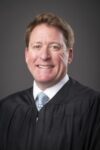
Judge Lindsay agreed in his order from the bench, concluding “this court believes that the Kanawha County Board of Education has a responsibility to the public school children here in Kanawha County to provide a healthy and safe atmosphere.”
The original complaint filed by the Charleston mother sought relief after the local school system would not recognize a religious exemption for her West Side elementary student. The family had cited irreparable harm from the loss of education, emotional distress and violations of constitutional rights and asked for emergency relief in court.
Lindsay, in an order from the bench that will be followed up with a final written order, denied the claim and dismissed the case with prejudice, meaning that it can’t be refiled.
He said that “the public interest would be best served to deny the injunction and make certain that the compulsory vaccination law, which has been in place since 1937, continues to keep the children of Kanawha County healthy and safe.”
The Kanawha judge added, “The court also finds that that the governor, through his executive order, is not empowered to make law that is empowered and entrusted by our state legislature.”
Lindsay’s ruling now joins rulings by two other judges, Cody Pancake in Mineral County and Michael Lorensen in Berkeley County, who have denied religious exemptions claims. “I’m not here to change the law,” Lorensen said last month.
The case in Raleigh County has already been the subject of a notice of appeal to the state Supreme Court. So the case history before Judge Froble is likely to be the focus of a review by justices, possibly next year.
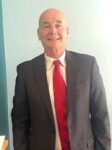
Froble has already ordered a temporary injunction for a couple of families in Raleigh County, and the judge anticipates filing a final permanent injunction order by the end of November. That final order, conceivably, would provide a framework for the members of the class action that Froble certified this week.
Nevertheless, it seems likely that lawyers for the school boards will point toward the opposite outcomes in Mineral, Berkeley and now Kanawha.
Froble pointed toward diverse outcomes to claims in various courtrooms in religious exemptions cases as one of the main reasons for certifying a class action.
Froble wrote that “the risk of inconsistent adjudications does not stem from differing factual contexts but from divergent judicial interpretations of the same statewide practice by the same state officials.”